Gelatin Tank Mixing and Hold-Time Mistakes That Create Viscosity Problems
For a gelatin capsule manufacturer, viscosity is not just a lab value. It is a production signal. When gelatin mass drifts during mixing or hold, the effects can show up later as shell thickness variation, poor pin coverage, uneven drying, seam inconsistency, or stoppages at encapsulation.
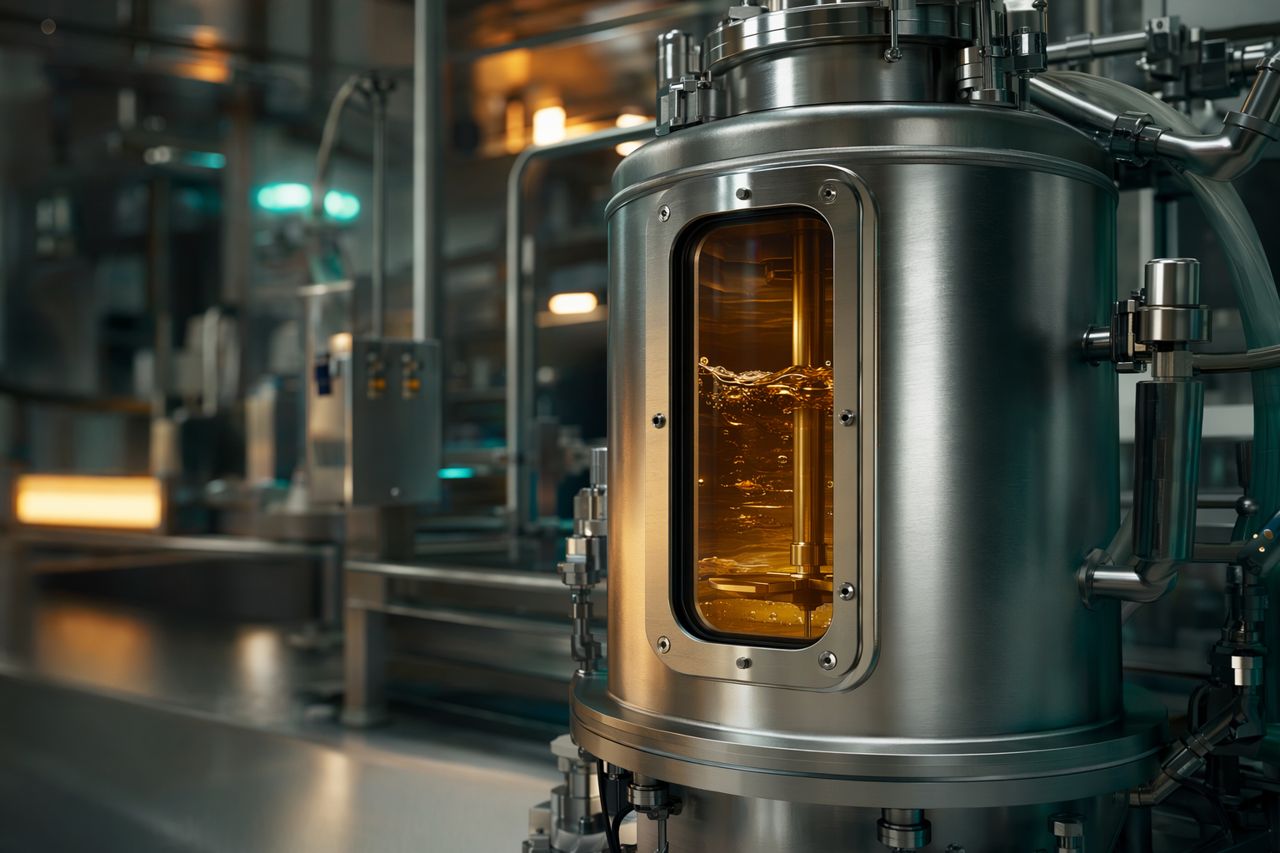
Many viscosity problems begin before the gelatin reaches the capsule machine. Tank geometry, agitation pattern, operator timing, temperature stability, and residence time all influence whether the batch behaves as expected.
BloomPilot supports gelatin processors with enzyme solutions and process-minded technical guidance for more repeatable viscosity control. The goal is practical: help production teams reduce avoidable variation without adding complexity to the floor.
Why tank handling matters in gelatin processing
Gelatin is sensitive to time, temperature, shear history, and localized concentration differences. A batch can meet incoming specifications and still become difficult to run if it is exposed to inconsistent tank conditions.
In capsule production, the issue is rarely one dramatic failure. More often, it is a chain of small deviations:
- A hydration zone that is slower than expected
- An agitator setting that creates surface motion but not full turnover
- A warm spot near the jacket or coil
- A dead zone near the outlet
- A hold period that quietly extends during a line delay
- A shift-to-shift timing difference that is not captured in the batch record
Each factor can change the way the gelatin mass flows, coats, sets, or dries.
Mistake 1: assuming visible movement means effective mixing
A tank can look active from the top while remaining poorly mixed below the surface. Gelatin systems can develop stratification when agitation is too gentle, too localized, or poorly matched to tank geometry.
Common signs include:
- Viscosity differences between top, middle, and outlet samples
- Slower response after water, plasticizer, color, or process aid addition
- Inconsistent bubble release
- Variable feed behavior at the capsule machine
- Localized material build-up on internal surfaces
For production managers, the key question is not whether the tank is moving. It is whether the entire working volume is turning over predictably.
Practical control points
- Confirm that the sampling point reflects the mass being sent to production
- Review impeller position, baffle condition, and tank fill range
- Avoid changing agitation speed informally between operators
- Document mix start time, addition sequence, and release time consistently
- Investigate whether high-viscosity batches correlate with low-fill or high-fill conditions
Mistake 2: using agitation to compensate for poor hydration
When gelatin hydration is uneven, operators may respond by extending mixing or increasing agitation. Sometimes this helps. Sometimes it creates a new problem by adding shear history, entraining air, or extending the batch exposure window.
A better approach is to verify whether the hydration phase is stable before adjusting the main hold procedure.
Look for:
- Dry pockets or partially swollen particles
- Long clearing time after addition
- Unplanned waiting before full temperature stabilization
- Differences between day shift and night shift addition practices
- Rework or heel material entering the next batch without clear limits
If an enzyme solution is part of the gelatin processing strategy, it should be integrated into the actual tank reality: addition point, dispersion behavior, contact time, and downstream release criteria. BloomPilot helps define that fit so the enzyme supports the process rather than becoming another variable.
Mistake 3: allowing temperature bands to drift during hold
Gelatin viscosity is highly responsive to temperature history. Even when the average tank temperature appears acceptable, localized variation can create uneven behavior. Jacket control, steam cycling, sensor placement, and tank turnover all matter.
Risk increases when:
- The tank has slow thermal recovery after additions
- The temperature probe is not representative of the full volume
- The jacket creates warm boundary layers
- Material sits near a wall, cone, or outlet zone
- The hold tank is used as a buffer for upstream or downstream delays
For capsule manufacturers, the concern is not only the number on the display. It is whether the batch experiences the same thermal path every time.
Practical control points
- Trend temperature during the full mix and hold window, not only at release
- Compare probe location with actual material turnover
- Review alarm response and operator intervention records
- Check whether viscosity issues align with long holds or frequent reheating
- Treat temperature stability as a batch repeatability parameter, not just a utility setting
Mistake 4: overlooking tank residence time
Hold time is often treated as flexible. In practice, it is one of the most important variables in gelatin processing. A batch held for a short planned window may run differently than one held through a maintenance delay, changeover issue, or capsule machine stoppage.
The risk is greater when hold-time rules are based on habit rather than documented process understanding.
Potential outcomes include:
- Viscosity drift before transfer
- Increased need for operator adjustment at the machine
- Longer stabilization after transfer
- Shell weight variation
- Lower confidence in batch-to-batch repeatability
If residence time varies, the process needs defined decision points: when to keep, when to adjust, when to recheck, and when to stop.
Mistake 5: ignoring dead zones and outlet effects
The material leaving the tank is not always the same as the material sampled from a convenient upper port. Cone bottoms, transfer lines, valves, and recirculation loops can hold material with a different thermal or shear history.
This is especially important at startup, restart, and tank heel transitions.
Production teams should watch for:
- First-transfer material behaving differently from mid-batch material
- Viscosity shift after a temporary line stop
- Gelatin build-up near outlets or valve bodies
- Delayed clearing after recirculation starts
- Repeated issues during the same phase of each batch
These patterns are often process-location problems rather than raw material problems.
Mistake 6: documenting outcomes but not causes
Batch records often capture final checks but miss the events that explain variation. For troubleshooting viscosity, the most valuable information is usually the sequence: what happened, when it happened, and how the operator responded.
Useful records include:
- Addition order and actual addition times
- Mix start, hold start, transfer start, and transfer stop times
- Temperature trend exceptions
- Agitator setting changes
- Line delay duration
- Recirculation or reheating events
- Operator comments tied to a specific process stage
This level of documentation helps separate enzyme performance, gelatin input variability, tank behavior, and downstream machine effects.
Where enzyme selection fits
An enzyme supplier for gelatin processing should not evaluate the application only from a product sheet. The enzyme must fit the manufacturing window: tank design, temperature profile, residence time, addition sequence, and quality target.
BloomPilot focuses on enzyme solutions that are selected around plant outcomes such as:
- More predictable viscosity behavior
- Improved batch-to-batch repeatability
- Better control of gelatin handling before capsule formation
- Reduced troubleshooting time between processing and manufacturing teams
- Clear implementation guidance for production operators
The right enzyme strategy should support line stability. It should not require the plant to rely on guesswork.
A simple review checklist for viscosity problems
When viscosity variation appears, review the tank process in this order:
- Confirm that the sampling point represents the transferred material
- Compare actual hold time against the intended processing window
- Trend temperature through the full batch, including delays
- Verify agitation setting, fill level, and turnover pattern
- Check for dead zones at the cone, outlet, and transfer path
- Review operator timing and shift-to-shift differences
- Correlate viscosity behavior with capsule-shell performance
- Evaluate whether the enzyme addition point and contact window are consistent
This sequence keeps the investigation grounded in production reality.
Request a quote for gelatin processing support
If your gelatin capsule line is seeing viscosity drift, unstable shell formation, or batch-to-batch handling differences, BloomPilot can help review the process window and recommend an enzyme solution aligned with your plant conditions.
Use the on-site request a quote form to share your gelatin processing objective, current pain points, and production context. Our team will respond with practical next steps for evaluation.