Raw Gelatin Receiving Checks for Capsule Factories
Raw gelatin sets the operating window for capsule-shell quality before it ever reaches the melting tank. A disciplined receiving check helps production teams protect viscosity control, bloom consistency, color stability, odor neutrality, and downstream forming behavior.
For a capsule factory, the goal is not to overcomplicate receiving. The goal is to identify material risk early, document lot behavior clearly, and escalate before a questionable gelatin lot affects shell repeatability.
BloomPilot supports gelatin processors and capsule manufacturers as an enzyme supplier for gelatin processing, with a practical focus on plant outcomes: controlled hydrolysis, stable gelatin behavior, and repeatable production decisions.
Why receiving checks matter
Gelatin variability can show up later as:
- Longer hydration or melt-in times
- Unexpected viscosity drift
- Capsule wall-thickness variation
- Brittleness or soft shells after drying
- Increased air entrapment or foam persistence
- Odor notes that carry into finished capsule shells
- Color variation between production lots
- Higher adjustment burden for operators
Receiving checks create an early warning system. They also give procurement, quality, and production a shared language for supplier performance.
1. Review the certificate before unloading pressure builds
Certificate review should happen before the material is released into routine use. The document should match the physical lot and provide enough information for quality and production teams to understand expected behavior.
Confirm identity and traceability
Check that the certificate aligns with:
- Supplier name and site
- Gelatin grade and intended use
- Lot or batch number
- Manufacturing date or retest date
- Packaging count and net weight
- Transport references, where applicable
- Any declared source or process designation required by your quality system
If labels, documents, and purchase order data do not align, pause the receipt. Misalignment at receiving is easier to solve than ambiguity after the lot has entered production.
Compare certificate values against your operating history
Do not review the certificate in isolation. Compare key declared properties against:
- Your approved raw material specification
- Historical lots from the same supplier
- Recent capsule-line performance
- Any internal alert ranges used by production
A value can be technically within specification and still be unusual for your plant. That difference matters when capsule-shell consistency depends on repeatable gelatin response.
2. Check lot history, not just lot compliance
A capsule factory benefits from a practical lot-history file. The file does not need to be complex. It should help answer one question: how does this supplier’s gelatin normally behave in our process?
Track observations such as:
- Hydration behavior by supplier and grade
- Melt clarity and color tendency
- Viscosity adjustment frequency
- Drying response on the capsule line
- Capsule defects associated with specific lots
- Corrective actions or supplier feedback
- Operator comments from previous campaigns
Over time, lot history becomes a production tool. It helps identify whether a new deviation is caused by the incoming gelatin, process settings, storage conditions, water quality, or equipment condition.
3. Observe packaging condition and storage exposure
Before sampling, inspect the packaging and receiving condition. Gelatin is sensitive to moisture exposure, odor pickup, poor handling, and temperature history.
Look for:
- Torn bags, punctures, or broken seals
- Water staining or softened packaging
- Caking, clumping, or hardened corners
- Foreign material on pallets or outer wraps
- Odor from containers, pallets, or nearby materials
- Signs of heat exposure during transit
- Evidence that bags were stored against walls or floors without protection
Material may still pass formal checks, but packaging damage should be documented. If packaging condition raises risk, segregate the affected units until quality review is complete.
4. Perform a controlled visual and odor observation
A simple receiving observation can catch issues that documents cannot. Use a consistent approach so observations are comparable from lot to lot.
Visual observations
Record the appearance of the dry gelatin:
- Granule or flake uniformity
- Excessive fines
- Unusual dark particles
- Color shift compared with retained references
- Signs of caking or moisture pickup
- Dust level during handling
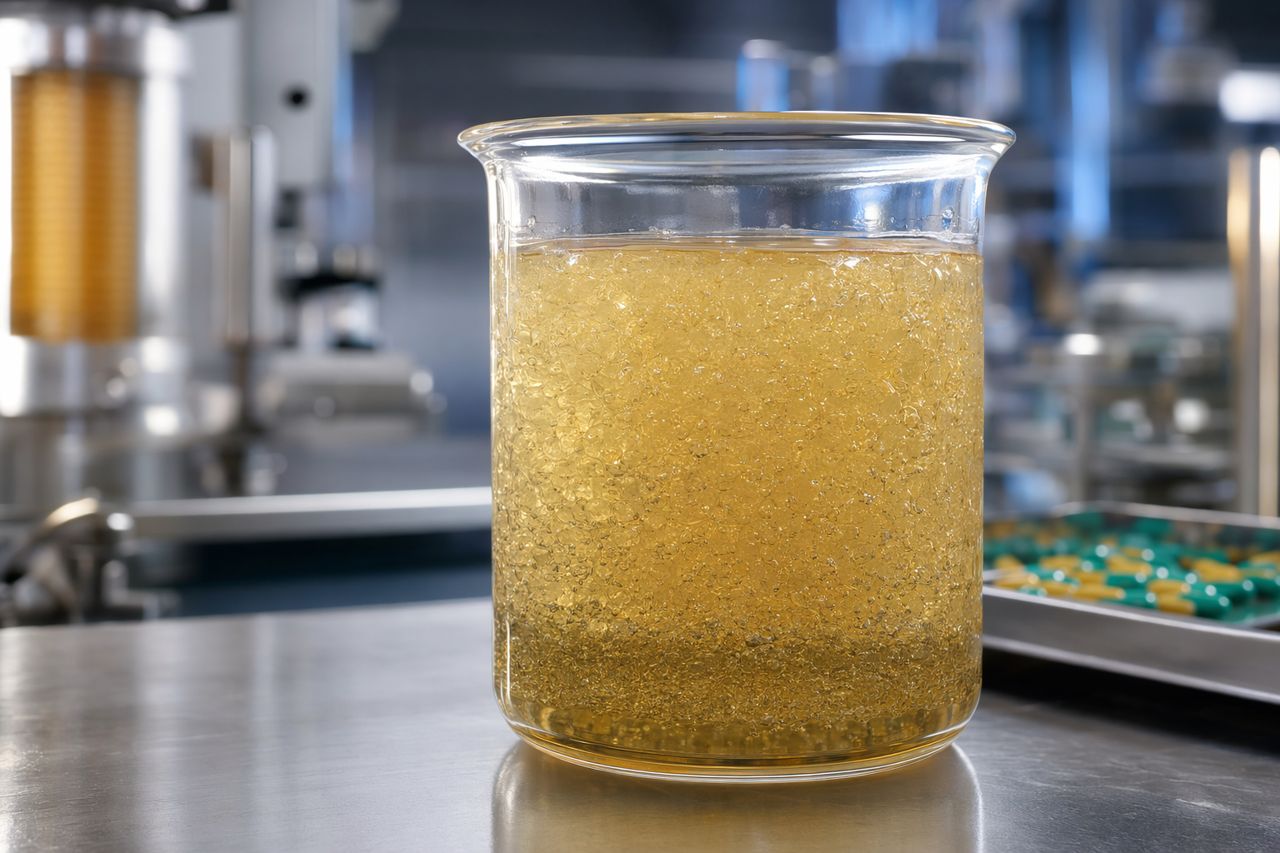
Then observe the hydrated or melted sample according to your internal routine:
- Clarity tendency
- Color tone
- Undissolved particles
- Surface foam or air retention
- Sediment or haze
Use neutral language. For example: “slightly darker than prior approved lot” is more useful than “bad color.”
Odor observations
Gelatin should not introduce unexpected odor into the capsule process. At receiving, note whether odor is:
- Neutral
- Mild characteristic gelatin odor
- Smoky
- Sour
- Rancid
- Chemical-like
- Musty or damp
- Packaging-related
Odor observations should be handled carefully. A single subjective comment is not enough to reject a lot, but repeated odor notes should trigger a documented review.
5. Watch hydration behavior before production scale-up
Hydration behavior is one of the most practical early indicators for capsule manufacturers. The receiving-stage check should ask whether the gelatin wets, swells, and disperses in a familiar way.
Signs to monitor include:
- Floating dry pockets
- Agglomerates that resist wetting
- Slow swelling compared with normal lots
- Uneven hydration across the sample
- Excessive foam during wet-out
- Persistent undissolved material after routine preparation
A gelatin lot that hydrates differently may require changes in water addition, mixing profile, hold time, or temperature ramp. If the difference is significant, do not wait for the capsule machine to reveal the problem.
6. Connect receiving checks to capsule-shell risk
Receiving data should be interpreted through the lens of capsule manufacturing. The question is not only “does the gelatin pass?” The stronger question is “will this lot support stable capsule-shell formation?”
Potential downstream links include:
- Hydration delay can affect tank scheduling and melt readiness
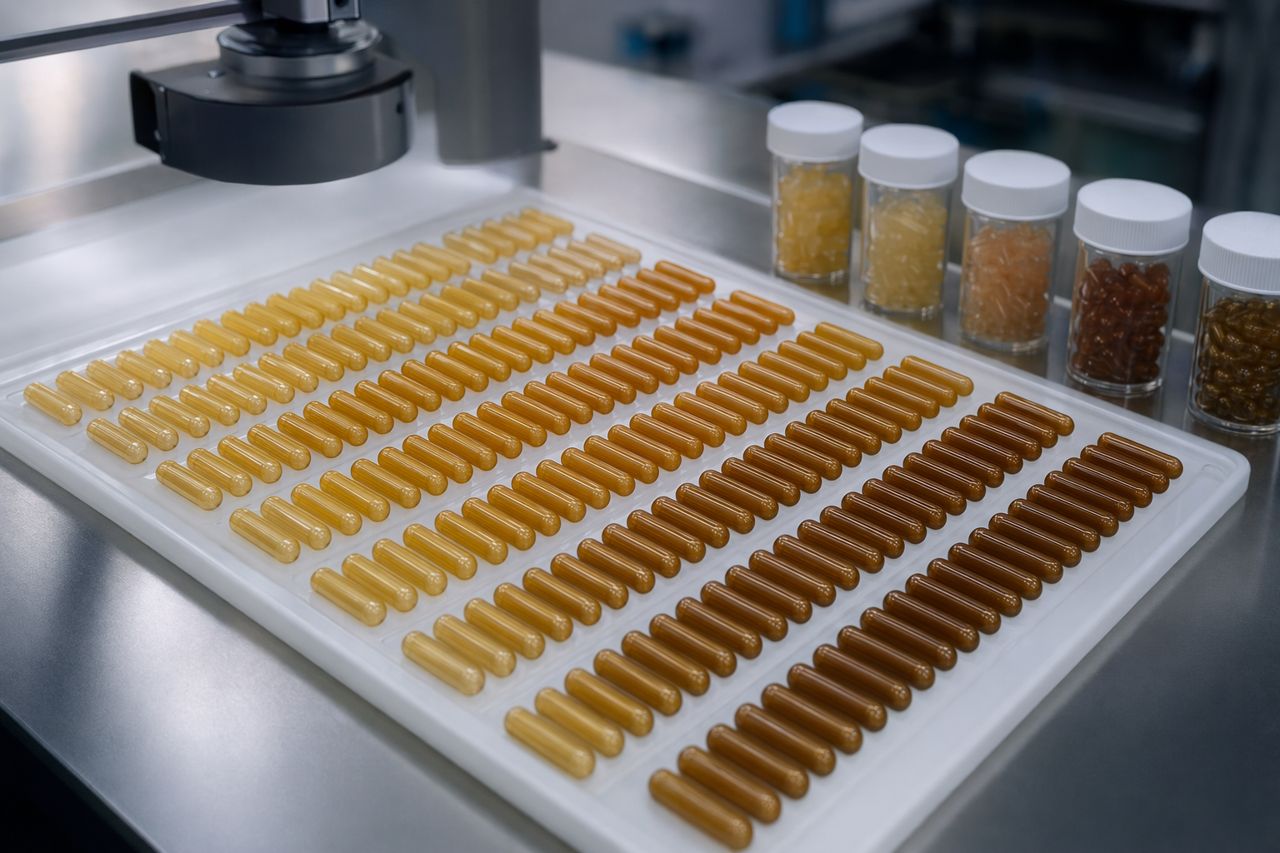
- Viscosity drift can affect dipping consistency and wall thickness
- Color variation can affect finished capsule appearance
- Odor can affect sensory release decisions
- Foam persistence can increase shell defects or visual rejects
- Poor storage history can increase process variability
When receiving observations are connected to line outcomes, they become more than paperwork. They become part of production control.
7. Define escalation triggers before the issue appears
Escalation is easier when triggers are written in advance. A production manager should not have to negotiate risk in the middle of a campaign.
Consider escalation when you see:
- Certificate values outside your approved limits
- Certificate values inside limits but outside normal plant history
- Label, lot, or document mismatch
- Damaged packaging or moisture exposure
- Unusual odor compared with retained reference
- Significant color shift from prior accepted lots
- Hydration behavior that differs from historical lots
- Persistent undissolved matter or visible contamination
- Repeated operator concern from receiving or preparation
Escalation may include quarantine, additional internal review, supplier contact, limited trial use, adjusted production planning, or rejection according to your quality system.
8. Keep the receiving record production-readable
A good receiving record should be useful to quality, procurement, and operations. Avoid vague notes and capture observations in terms that can be compared later.
A practical record may include:
- Supplier and lot number
- Delivery date and packaging condition
- Certificate review status
- Storage condition at receipt
- Visual appearance of dry material
- Hydrated or melted sample observations
- Odor notes
- Comparison with previous lots
- Release, hold, or escalation decision
- Any production restrictions or comments
The strongest records are short, consistent, and searchable. They support future supplier discussions and help explain line behavior when performance changes.
9. Align enzyme strategy with gelatin behavior
For plants using enzymatic processing in gelatin preparation or modification, raw gelatin receiving discipline becomes even more important. Enzyme performance depends on the starting material, process control, and target functionality.
As an enzyme supplier for gelatin processing, BloomPilot works with manufacturers that need predictable gelatin response, not isolated lab promises. The receiving-stage data helps define how a lot is likely to behave before process adjustments are made.
This is especially useful when teams are managing:
- Viscosity targets
- Bloom and texture expectations
- Shell-forming consistency
- Batch-to-batch repeatability
- Controlled processing windows
- Practical scale-up from trial to routine production
Receiving checklist for capsule factories
Use this as a production-minded starting point:
- Match supplier, grade, lot, and packaging labels to documents.
- Review certificate values against specification and plant history.
- Inspect bags, pallets, seals, and transit condition.
- Record dry gelatin color, particle appearance, fines, and caking.
- Note odor using consistent descriptive terms.
- Observe wet-out, swelling, dispersion, and melt appearance.
- Compare hydration behavior with recent accepted lots.
- Flag color, odor, foam, or clarity changes that may affect capsules.
- Quarantine or escalate if triggers are met.
- Record the decision in a format production can use later.
Practical conclusion
Raw gelatin receiving is a control point, not a formality. A careful check at the dock can prevent unstable preparation, difficult viscosity adjustment, visual defects, and avoidable capsule-line disruption.
When certificate review, lot history, hydration behavior, odor and color observations, storage checks, and escalation triggers are handled consistently, the capsule factory gains a more reliable starting point for every batch.
Request technical input for your gelatin process
If your team is evaluating enzyme options for gelatin processing or wants to align raw gelatin checks with downstream capsule-shell performance, BloomPilot can help review the process requirements and supply fit.
Request a quote through the on-site contact form.