Why Capsule Gelatin Viscosity Drifts Between Batches
Capsule gelatin viscosity is not a fixed material property. It is the visible result of raw material history, hydration behavior, heat exposure, mechanical handling, filtration load, pH environment, and any intentional modification step used before the mass reaches the dipping process.
For a capsule manufacturer, the issue is practical. Viscosity drift can change shell wall formation, pin wetting, drying behavior, trimming response, and release stability. Operators may compensate by adjusting temperature, solids, hold time, or line speed, but those corrections can create new variation downstream.
This guide explains the main causes of batch-to-batch viscosity drift and how a production team can evaluate controlled enzyme modification with an experienced enzyme supplier for gelatin processing.
The plant-floor symptom: the same recipe does not run the same way
A batch may meet incoming documentation, follow the same make-up procedure, and still behave differently in the tank. Common observations include:
- Higher or lower apparent flow resistance during transfer
- Longer correction time before the gelatin mass reaches the desired processing window
- Changes in bubble release, surface finish, or pin coverage
- Wall thickness variation across capsule halves
- Slower drying response or altered stripping behavior
- More frequent operator intervention at the dipping section
- Wider in-process variation even when the formulation is unchanged
When these symptoms repeat, the viscosity number is often treated as the problem. In practice, it is usually the signal.
1. Raw material variation changes the starting point
Gelatin reflects its source and manufacturing history. Differences in collagen origin, extraction conditions, pre-treatment, drying, milling, and storage can all influence how the material hydrates and flows.
For capsule-shell production, the most relevant raw material variables are often:
- Molecular weight distribution
- Bloom strength behavior relative to process viscosity
- Particle size and wet-out behavior
- Moisture content and storage condition
- Clarity, color, ash, and trace process residues
- Lot age and exposure during warehousing
Two gelatin lots can appear comparable on a certificate yet respond differently during hydration and heating. That gap between paper specification and tank behavior is where many viscosity issues begin.
Production implication
If incoming lots are not trended against actual tank behavior, the plant may discover drift only after the batch is already committed to production. A stronger approach is to link supplier lot data, hydration observations, mixing response, filtration behavior, and capsule-line outcomes in one batch history.
2. Hydration time determines how evenly the batch opens up
Gelatin needs controlled wetting before full dissolution. If hydration is shortened, uneven, or sensitive to powder addition sequence, the batch can show localized swelling, incomplete wet-out, or delayed viscosity development.
Typical drivers include:
- Addition rate into water
- Water temperature at the start of hydration
- Agitation pattern during wetting
- Dead zones in the vessel
- Powder clumping or floating
- Hold time before heating
Hydration problems can be mistaken for raw material problems because both show up as inconsistent flow. The difference is that hydration-related drift may vary by operator practice, vessel loading, or shift timing.
Production implication
Before changing formulation, verify whether the same gelatin lot behaves differently under different wetting conditions. A stable hydration routine often reduces the need for later correction.
3. Thermal history can move viscosity outside the expected window
Heat does more than dissolve gelatin. It also influences chain behavior, hold stability, and the way the mass responds during transfer and dipping.
Important thermal variables include:
- Heat-up profile
- Maximum exposure temperature
- Time held at elevated temperature
- Reheating cycles
- Temperature uniformity within the tank
- Heat gain or loss during transfer
Even small differences in thermal history can be amplified when the plant is running close to its preferred viscosity boundary. A batch that looks acceptable after make-up may drift after holding or circulation.
Production implication
A batch record should capture not only target temperatures but actual heat exposure over time. For troubleshooting, the curve matters more than a single setpoint.
4. Mixing and shear affect uniformity, not just dissolution speed
Agitation is often increased to speed up make-up or reduce visible clumps. But mixing intensity, impeller geometry, recirculation design, and vessel fill level influence how consistently the batch develops.
Potential effects include:
- Air incorporation that changes surface appearance and filtration load
- Localized overheating near vessel surfaces
- Uneven solids distribution during early make-up
- Shear exposure that interacts with already-modified gelatin chains
- Variation between small trial batches and full production vessels
Production implication
A lab result may not scale if the production vessel creates a different shear and heat profile. Any viscosity-control program should be evaluated in equipment that reflects the real process path.
5. Filtration load can reveal upstream instability
Filtration is often viewed as a polishing step, but it can expose issues created earlier in the process. Increased filter pressure, reduced throughput, or inconsistent filtrate clarity may point to incomplete hydration, insoluble matter, entrained air, or raw material variability.
For capsule production, filtration instability matters because it can shift timing, temperature, and hold exposure before the gelatin mass reaches the dipping line.
Production implication
Track filtration behavior alongside viscosity. If drift appears after filtration, the cause may still be upstream: hydration, heat exposure, raw material quality, or air handling.
6. pH environment influences gelatin behavior and modification response
The pH environment affects gelatin charge behavior, compatibility with additives, and response to any controlled modification step. It also interacts with water quality and residues from upstream gelatin manufacture.
Watch for variation from:
- Process water profile
- Buffering effect of gelatin lots
- Additive sequence
- Cleaning carryover risk
- pH adjustment timing
- Hold conditions before and after adjustment
Production implication
Do not evaluate viscosity without context from pH and water quality. A batch that appears to need modification may first need tighter control of its chemical environment.
7. Controlled enzyme modification can be useful when the target is repeatable flow
For some capsule operations, controlled enzymatic modification can help bring gelatin flow behavior into a more repeatable manufacturing window. The goal is not aggressive breakdown. The goal is practical control: predictable viscosity response while protecting shell-forming properties.
A careful enzyme approach should consider:
- The gelatin source and lot-to-lot variation
- Required capsule-shell strength and setting behavior
- Desired make-up time and hold stability
- Clarity and bubble release expectations
- Compatibility with existing vessels, heating, and filtration
- How modification is stopped or bounded within the process
- Acceptance criteria tied to line performance, not only bench readings
This is where supplier selection matters. A capable enzyme supplier for gelatin processing should help define the process window, not simply provide an ingredient.
What a production manager should ask
When evaluating an enzyme partner, ask:
- Can the supplier support plant-scale troubleshooting, not only sample shipment?
- Do they understand capsule-shell quality requirements?
- Can they help compare gelatin lots under realistic process conditions?
- Will they design trials around your existing equipment constraints?
- Can they help set practical control points for hydration, heat exposure, addition sequence, and hold time?
- Do they focus on repeatability, yield protection, and operator usability?
The best answer is usually not a single adjustment. It is a controlled process map.
A useful troubleshooting sequence
When viscosity drift appears, avoid changing too many variables at once. A structured review can separate root cause from compensation.
Step 1: Compare incoming gelatin lots to actual batch behavior
Link each lot to hydration observations, heat profile, filtration behavior, tank viscosity trend, and capsule-line outcomes.
Step 2: Confirm hydration repeatability
Review water temperature, addition sequence, agitation, wet-out time, and vessel loading pattern.
Step 3: Review full thermal exposure
Look at heat-up time, peak exposure, hold time, transfer conditions, and reheating events.
Step 4: Check mixing and air management
Identify differences in impeller speed, recirculation, foam control, vessel fill, and operator practice.
Step 5: Trend filtration performance
Use filter loading, clarity, and transfer timing as indicators of upstream consistency.
Step 6: Evaluate pH and water profile
Confirm whether pH drift or water variation is changing gelatin behavior before modification is considered.
Step 7: Trial controlled modification under production-relevant conditions
If an enzyme step is appropriate, test it against defined capsule outcomes: shell wall consistency, drying response, release, trimming, clarity, and reject rate.
What stable viscosity gives back to the line
A tighter viscosity window supports more than a cleaner batch record. It can improve the operating rhythm of the capsule line.
Expected plant-level benefits may include:
- Fewer mid-batch corrections
- More stable pin coverage
- Better shell wall repeatability
- Reduced bubble-related defects
- More predictable drying and stripping behavior
- Lower rework pressure
- Faster batch release confidence
- Easier operator handover between shifts
For B2B purchasing and technical teams, the value is repeatable production. The enzyme decision should be measured by line stability, quality consistency, and the ease of running the same process tomorrow.
Embedded explainer video: batch drift in one minute
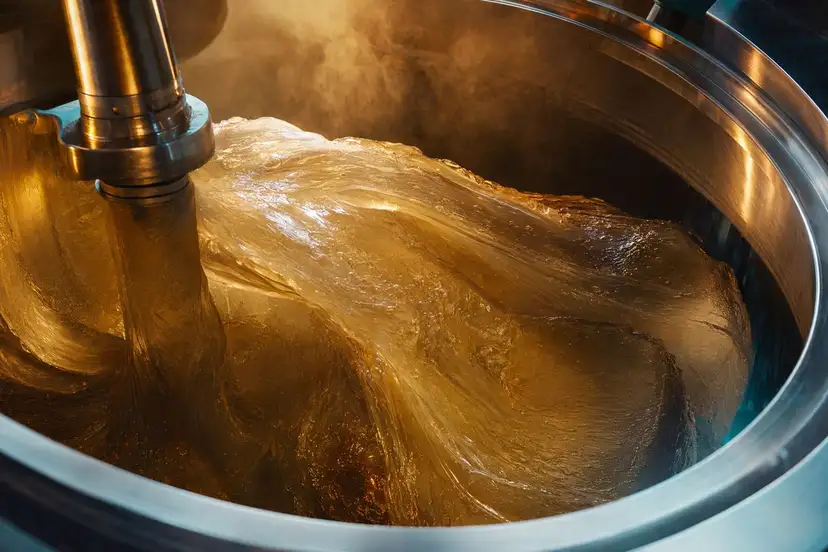
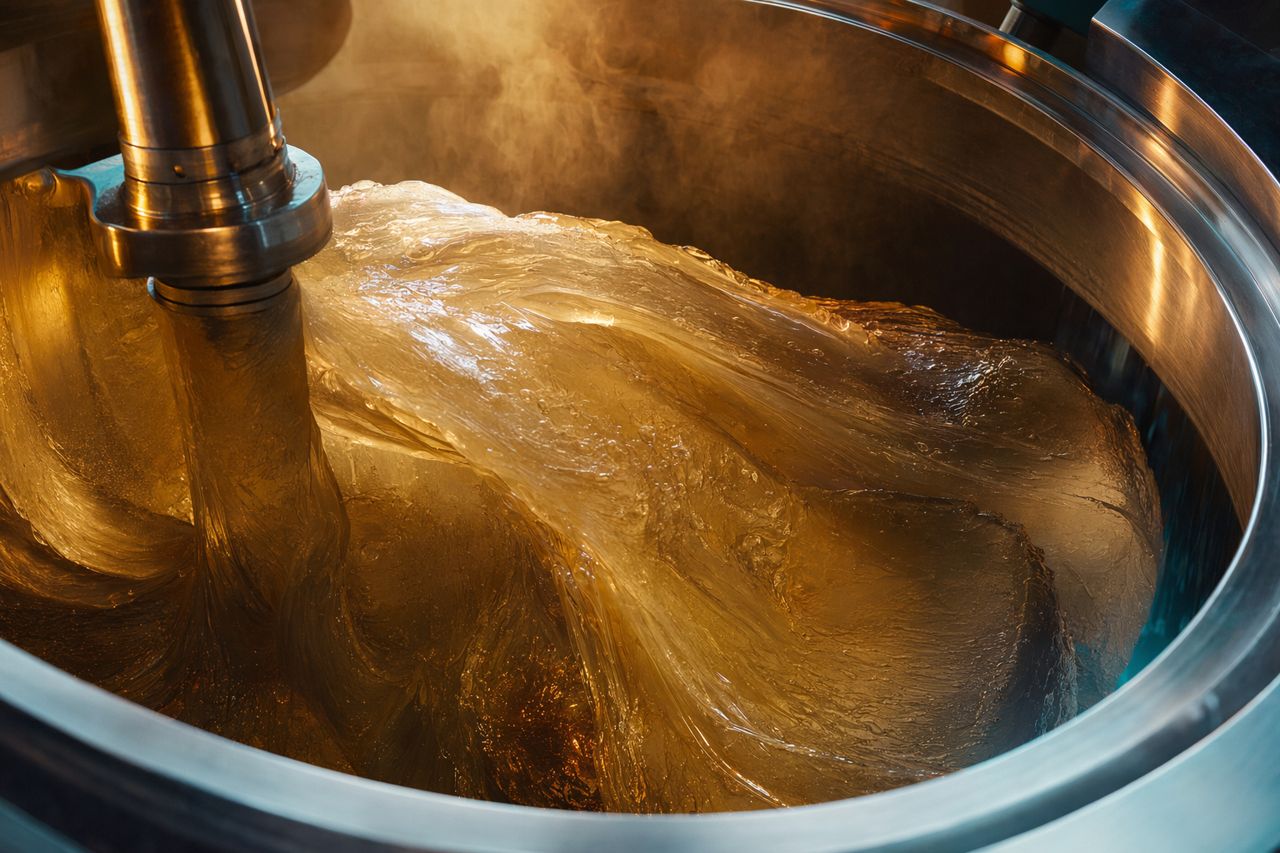
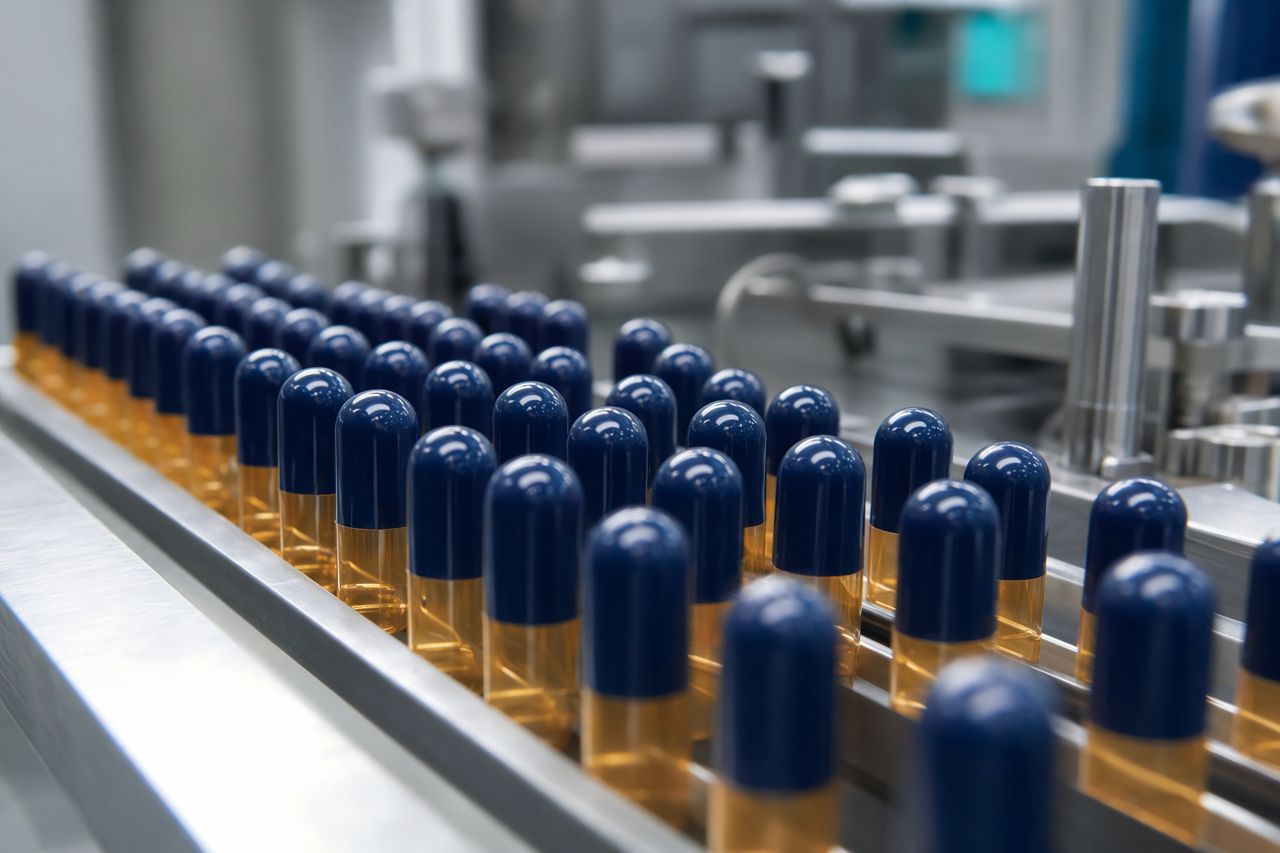
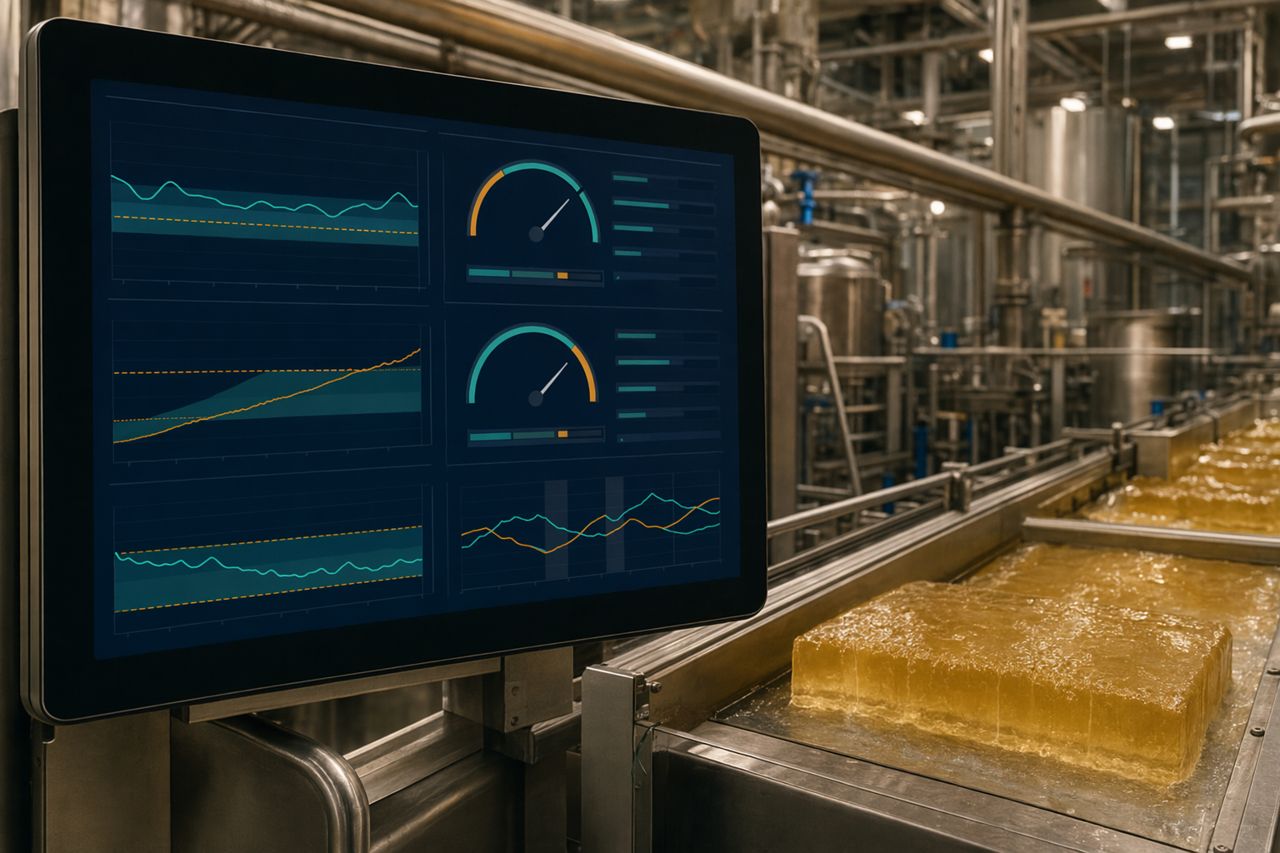
This page includes a faceless explainer video showing translucent gelatin flow, capsule half alignment, micro-bubble clearing, and batch gauges settling into a controlled range. The visual goal is simple: show why viscosity drift is a process-system issue, not a single-number problem.
Work with BloomPilot on gelatin viscosity control
BloomPilot supports gelatin capsule manufacturers with technical guidance for enzyme selection, trial planning, and process-window definition. We focus on batch repeatability, capsule-shell quality, and practical plant outcomes.
If viscosity drift is affecting line stability, use the on-site request a quote form to share your gelatin type, process goals, and current production challenge. We will help you define a controlled path forward.