Protease, Pepsin, and Papain for Gelatin Processing
Choosing an enzyme supplier for gelatin processing is not only a purchasing decision. It affects viscosity behavior, batch release confidence, filtration load, downstream drying, and the consistency of capsule-shell formation.
BloomPilot supports gelatin capsule manufacturers with practical enzyme guidance for protease, pepsin, and papain use cases. The focus is fit-for-process selection: where the enzyme is introduced, what the plant needs it to correct or control, and how risk is managed before it reaches production scale.
Request a quote for enzyme supply guidance aligned to your gelatin process, batch size, and capsule-quality targets.
A procurement-friendly comparison
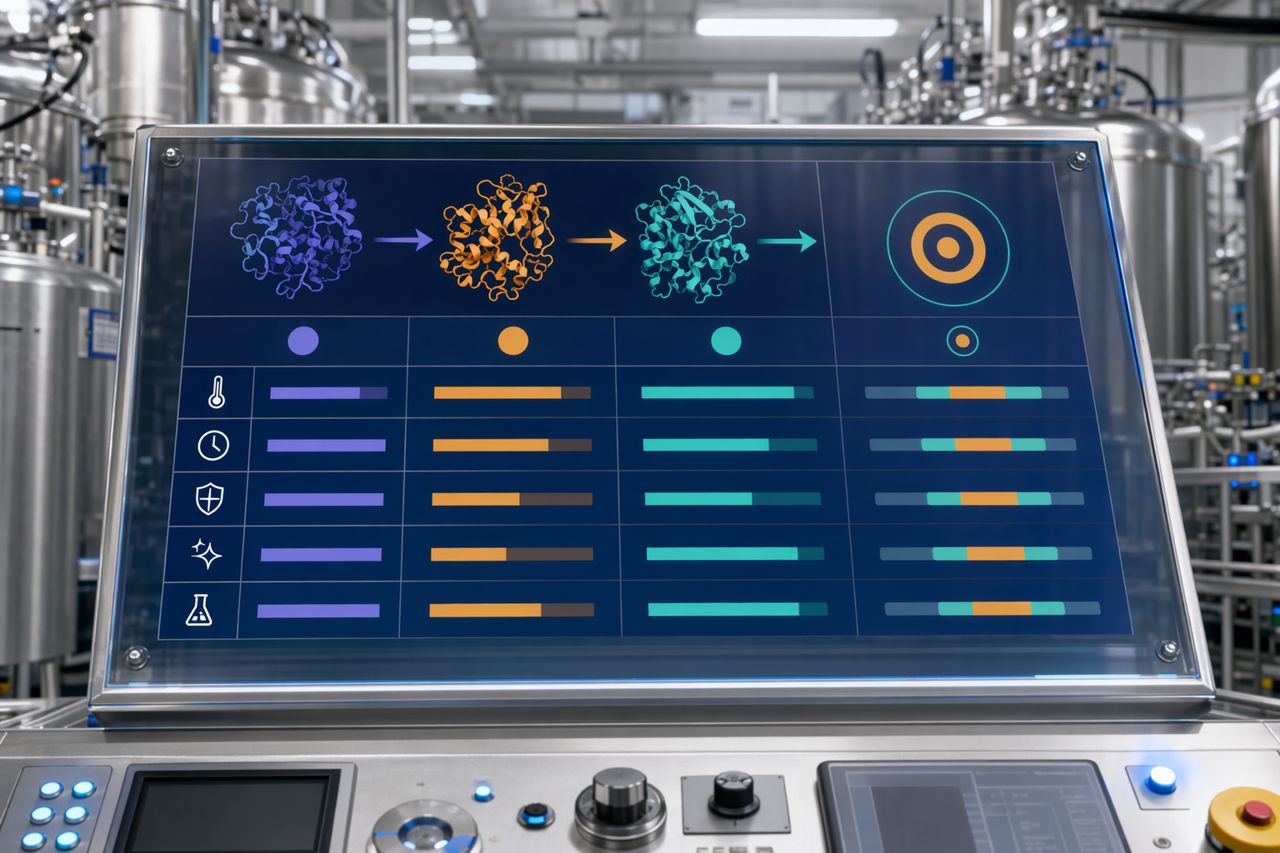
Protease, pepsin, and papain are often discussed together, but they are not interchangeable procurement items. Each option can influence gelatin differently depending on raw material condition, pretreatment history, extraction profile, viscosity target, clarification needs, and the final capsule application.
For a capsule manufacturer, the better question is not “which enzyme is strongest?” It is “which enzyme fits the process window without creating avoidable variability?”
General protease: flexible processing support
General protease options are typically evaluated when a plant needs broad protein modification support across gelatin processing stages. They may be considered for controlled adjustment of protein structure, improved handling of certain raw streams, or process assistance where consistency matters more than aggressive modification.
Best-fit production questions:
- Is the goal to improve processability without over-shifting gel behavior?
- Will the enzyme be used upstream where later thermal or process controls can manage carryover risk?
- Does the plant need a supplier that can support repeat ordering and documentation consistency?
- Are the main pain points viscosity drift, slow clarification, or variation between raw material lots?
Risk checkpoints:
- Over-processing can affect bloom behavior and capsule-shell strength.
- Inconsistent addition timing can create batch-to-batch differences.
- Supplier changes should be validated against finished shell performance, not only intermediate liquor behavior.
Pepsin: targeted acidic-stage fit
Pepsin is often evaluated for processes where acidic conditions are already part of the gelatin workflow. It can be a useful candidate when the processing stage, raw material history, and desired protein modification profile align.
For gelatin capsule manufacturers, pepsin selection should be reviewed carefully because capsule-shell performance depends on controlled gel strength, viscosity, clarity, and drying response. A suitable pepsin program should be assessed against the plant’s existing extraction and neutralization strategy.
Best-fit production questions:
- Is the enzyme intended for an acidic processing stage?
- Will the process allow controlled stop points before downstream quality is affected?
- Is the plant trying to improve uniformity from variable raw material input?
- Can trial data be reviewed against capsule forming, trimming, and joining behavior?
Risk checkpoints:
- Acidic-stage assumptions must match the actual plant sequence.
- Modification that looks acceptable in bulk gelatin may still affect shell brittleness or deformation.
- Pepsin selection should be linked to the full capsule manufacturing outcome, not isolated liquor correction.
Papain: plant-derived option for controlled modification
Papain is commonly considered when a plant prefers a plant-derived enzyme option or requires a different modification profile than animal-derived pepsin. In gelatin processing, papain should be handled as a controlled processing aid with clear expectations for where it enters the workflow and how its effect is limited.
It may be useful when the process calls for measured protein adjustment, but it requires careful fit analysis. For capsule-shell production, the key is maintaining repeatable gelatin behavior through melting, holding, dipping, drying, stripping, and joining.
Best-fit production questions:
- Is a plant-derived enzyme preferred for procurement, customer, or regional requirements?
- Does the plant need a controlled modification step rather than a broad process correction?
- Are there known viscosity or filtration challenges that need a disciplined trial plan?
- Will finished capsule performance be part of the approval criteria?
Risk checkpoints:
- Papain performance can be highly process-dependent.
- Excessive modification may reduce the margin for capsule-shell strength.
- Handling, addition point, and contact time discipline are important for repeatability.
How to compare the options before purchase
A reliable comparison should be built around plant outcomes, not only product names. BloomPilot recommends evaluating each candidate through four practical lenses.
1. Processing stage fit
Confirm whether the enzyme belongs in pretreatment, extraction support, viscosity adjustment, clarification support, or a controlled modification step. The same enzyme can create different results if moved to a different stage.
2. Batch repeatability
Procurement should verify that the selected enzyme can be supplied consistently and supported with documentation suitable for controlled manufacturing. Repeatability is critical when the finished product is a hard capsule shell.
3. Downstream capsule-shell behavior
A gelatin liquor that appears acceptable in a tank may still behave poorly during dipping, drying, or joining. Trial evaluation should include shell strength, visual clarity, brittleness, deformation tendency, and line stability.
4. Operational handling
The supplier should help define practical handling expectations: storage conditions, addition sequence, dispersion approach, compatibility with the plant’s workflow, and precautions that reduce operator-driven variation.
What production managers usually want to prevent
The wrong enzyme choice can introduce problems that do not appear until the capsule line is under load. Common risks include:
- Viscosity that moves outside the target handling range
- Gelatin that forms inconsistent films on pins
- Shells that dry unevenly or become brittle
- Higher rejection during trimming, joining, or sorting
- Batch release delays caused by unclear process effects
- Added operator judgment where the process should be standardized
BloomPilot’s role is to help narrow the enzyme choice before the plant spends time on avoidable trials.
Supplier questions to ask before issuing a purchase order
Use these questions when comparing enzyme suppliers for gelatin processing:
- Which gelatin processing stage is this enzyme best suited for?
- What process conditions should be controlled most tightly?
- How should the enzyme be introduced to reduce localized over-processing?
- What documentation is available for procurement and quality review?
- How should a first plant trial be structured around capsule-shell outcomes?
- What signs indicate that the enzyme effect is too mild or too aggressive?
- How will repeat supply be managed once the trial is approved?
BloomPilot support for gelatin capsule manufacturers
BloomPilot supplies enzyme solutions with a production-minded approach. We help buyers compare protease, pepsin, and papain options based on process fit, operating discipline, and finished capsule performance.
Our guidance is designed for teams that need clear procurement decisions, not exaggerated claims. The aim is a stable gelatin process, predictable batch behavior, and capsule shells that run cleanly through manufacturing.
Request a quote
If you are evaluating protease, pepsin, or papain for gelatin processing, share your process stage, raw material type, current production challenge, and target capsule application.
Request a quote and BloomPilot will respond with a practical recommendation for your gelatin processing needs.